



2025-2 EU Society 3rd Session September 25, 2025
페이지 정보

본문
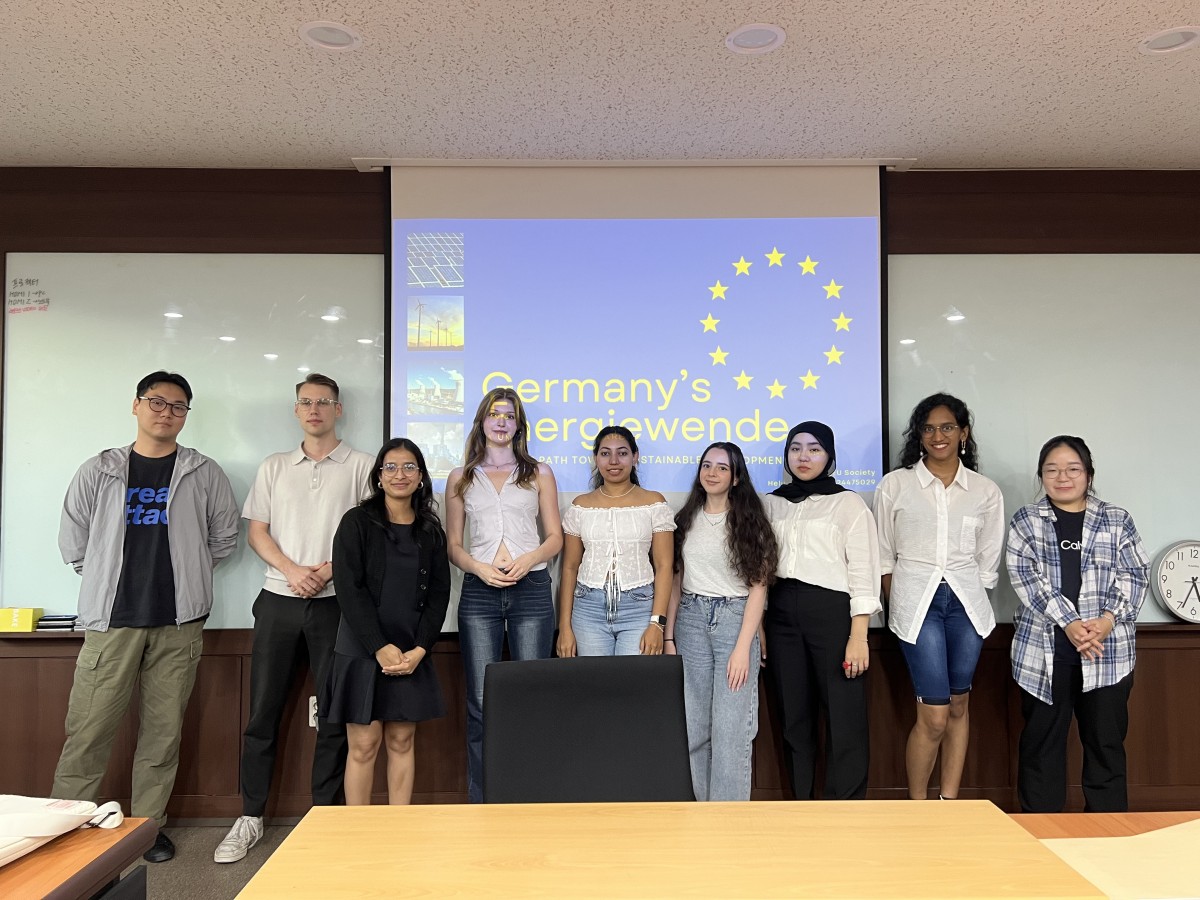
The third session was titled “Germany’s Energiewende: A Unique Path Toward Sustainable Development,” and was presented by Helmich Silke for the EU Society. It explored Germany’s distinctive energy transition within the European Union. The presentation began by defining Energiewende as the replacement of fossil and nuclear energy with sustainable and ecological energy sources, a concept that originated from the Öko-Institut’s publication *“Energy Transition – Growth and Prosperity without Oil and Uranium.” It traced the historical context from early nuclear development in the 1950s and 1960s, through the environmental and anti-nuclear movements of the 1970s and 1980s, to the Renewable Energy Act in the 2000s. Key turning points such as the Fukushima disaster in 2011 led to mass protests and the political decision to phase out nuclear power, culminating in the deactivation of Germany’s last nuclear reactor in 2023. Core elements of the Energiewende—including nuclear phase-out, renewable energy expansion, energy efficiency, public participation, and strong policy instruments—were discussed and compared with other EU countries such as France, Denmark, Spain, and the Nordic states, highlighting why Germany’s approach remains unique. The session also connected Energiewende to the Sustainable Development Goals, addressed challenges and criticism, and looked ahead to future targets, including achieving 80% renewable electricity by 2030 and climate neutrality by 2045, alongside the need for stronger EU integration and innovation in energy storage, hydrogen, and smart grids.
In conclusion, the presentation emphasized that Germany’s Energiewende is an ambitious and influential model within the EU, demonstrating both the opportunities and complexities of transitioning toward a sustainable energy system, while offering valuable lessons for other European countries.
Discussion Questions:
As Germany reduces fossil fuels and increases reliance on renewables, how can it manage greater dependence on neighboring countries for electricity while ensuring energy security, and is there a possible European-level solution?
How can Germany address the instability and volatility of renewable energy sources to maintain a reliable electricity supply, and what technological, policy, or market solutions could help?
With AI systems demanding increasing amounts of electricity, how might this rising energy consumption affect Germany’s Energiewende and its ability to meet renewable energy and climate targets?

- 이전글2025-2 EU Society 4th Session October 02, 2025 25.10.03
- 다음글2025-2 EU Society 2nd Session September 18, 2025 25.09.19
댓글목록
등록된 댓글이 없습니다.